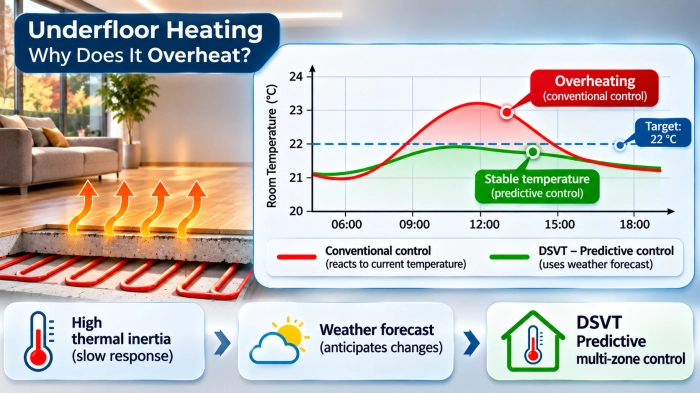
A common problem in homes with underfloor heating is that the room temperature continues to rise even after the heating has been switched off, sometimes exceeding the thermostat's target temperature by several degrees. This is particularly noticeable during spring and autumn, when outdoor temperatures can change rapidly.
This phenomenon is not necessarily caused by a faulty thermostat or heating system. In many cases, it results from the high thermal inertia of underfloor heating and the inability of conventional control systems to anticipate upcoming weather changes.
Unlike radiator heating, underfloor heating does not simply heat a relatively low-mass heat emitter. The heating pipes are embedded within the floor structure, meaning that a substantial mass of concrete or other building material is heated during operation.
This structure can store a considerable amount of thermal energy and gradually release it into the room over an extended period. This characteristic is known as thermal inertia.
High thermal inertia has both advantages and disadvantages:
A conventional room thermostat switches the heating on or off according to the current indoor temperature. For example, if the target temperature is 22 °C, the thermostat stops requesting heating when its switching threshold is reached.
However, a significant amount of thermal energy may still be stored within the floor. Even after the boiler or heat pump stops operating, the heated floor continues to transfer heat into the room.
A similar delay can occur in the opposite situation. When the thermostat requests heating again, it takes time for the floor structure to warm up and release a significant amount of heat. During this period, the room temperature may continue to fall.
A conventional thermostat primarily reacts to temperature changes that have already occurred. In a heating system with high thermal inertia, however, there may be a delay of several hours between a control action and its full effect on the room temperature.
The solution is therefore not necessarily a more accurate thermostat, but a control strategy that takes the slow response of the heating system into account.
During transitional seasons, nights and early mornings are often cold, while outdoor temperatures can rise considerably during the day. Sunlight entering through windows can also introduce additional heat into the building.
Consider the following illustrative example:
In this situation, the heating system has stored thermal energy within the floor structure that is no longer fully required because of the changing outdoor conditions.
Overheating can reduce indoor comfort, increase heat loss from the building and result in unnecessary energy consumption.
Not every overheating problem is caused solely by thermal inertia. The design and configuration of the heating system should also be examined.
Using the lowest suitable supply water temperature can provide more consistent heat output and reduce excessive heat accumulation within the floor structure. This can also improve energy efficiency in systems using heat pumps or condensing gas boilers.
Conventional weather-compensated heating control adjusts the heating water supply temperature according to current outdoor conditions. Higher water temperatures may be used during colder weather and lower temperatures during milder conditions.
This can represent a significant improvement over simple thermostat-based control. However, traditional weather compensation typically considers the currently measured outdoor temperature rather than the conditions expected over the next few hours.
With high-thermal-inertia underfloor heating, it is often beneficial to avoid frequent and substantial changes in target temperature. More consistent heating operation with smaller temperature fluctuations can improve indoor comfort.
Different rooms within a home can have significantly different heating requirements. A south-facing living room with large windows may require considerably less heating on a sunny day than a north-facing bedroom.
Multi-zone heating control allows the heating demand of individual rooms to be managed independently. However, this alone does not eliminate the delayed response caused by the thermal inertia of underfloor heating.
Weather forecasts allow a heating controller to consider not only the current outdoor temperature but also the changes expected over the next few hours.
If the system knows that a significant increase in outdoor temperature is expected, it can reduce heating demand earlier. The thermal energy already stored within the floor can continue to heat the room while the risk of overheating is reduced.
Conversely, before an expected temperature drop, the system can request heating earlier, allowing the slowly warming floor structure to provide the required heat in time.
This approach is known as predictive heating control, or weather forecast-based look-ahead control.
One of the key features of DSVT (Dual Smart Virtual Thermostat), developed by the Szélessáv Public Benefit Foundation, is weather forecast-based predictive control designed to compensate for the thermal inertia of heating and cooling systems.
DSVT can adjust heating and cooling switching thresholds in advance based on the difference between current and expected outdoor temperatures. This allows the system to modify its operation before the anticipated weather change actually occurs.
The look-ahead period is configurable, allowing the control strategy to be adapted to the thermal characteristics of the building and its heating system. A thick concrete floor with embedded heating pipes may require different settings from a faster-responding radiator heating system.
DSVT does not automatically calculate the thermal inertia of the building. Appropriate settings should therefore be determined by observing system operation and fine-tuning the configuration.
Additional DSVT features include:
DSVT is also suitable for retrofitting existing residential heating systems, meaning that complete replacement of the existing heating installation may not be necessary.
→ Discover the DSVT predictive multi-zone heating and cooling control system
Yes. High thermal inertia is not limited to heating systems. It can also affect wall cooling, ceiling cooling and other radiant cooling installations.
Using weather forecast information, the cooling system can prepare earlier for an expected increase in outdoor temperature or reduce cooling demand before cooler weather arrives.
However, humidity and dew point monitoring are particularly important in radiant cooling systems to reduce the risk of condensation. DSVT provides a dedicated control function for this purpose.
There is no universal energy-saving percentage that applies to every building. Potential savings depend on the building's insulation, thermal inertia, heating system design, previous control strategy, weather conditions and configuration of the new control system.
The primary objective of predictive heating control is to maintain more consistent indoor temperatures and avoid unnecessary overheating. Reducing the amount of thermal energy supplied to the building when it will no longer be required can also have a positive effect on energy consumption.
One of the common causes of underfloor heating overheating is its high thermal inertia and the delayed effect of heating control actions. The floor structure continues to release previously stored thermal energy even after the heating has been switched off.
In addition to appropriate supply water temperatures, hydraulic balancing and conventional weather compensation, considering expected weather changes in advance offers another way to improve heating control.
With high-thermal-inertia heating systems, it is important not only to determine when heating should be switched on or off, but also when the generated thermal energy will actually be needed.
DSVT predictive heating control addresses this challenge by not simply reacting to changing conditions, but also anticipating them whenever possible.
→ Learn more about DSVT heating and cooling control