

The purpose of frost protection is to prevent excessive cooling of system components located in areas exposed to freezing temperatures, thereby reducing the risk of frost-related damage.
If a pipeline, plant room, outdoor unit, or another part of the system is located where temperatures may approach freezing point, DSVT can automatically activate one or more selected devices based on the measured temperature.
These devices may include:
The function uses two basic settings:
Frost protection operates according to the configured temperature threshold and hysteresis. If the monitored temperature reaches or falls below the configured temperature threshold, the system activates the switches assigned to frost protection.
The devices remain switched on until the temperature reaches the threshold plus the configured hysteresis.
If multiple temperature sensors are selected, DSVT uses their average temperature. Sensors providing invalid readings or unavailable due to a timeout are excluded from the average calculation.
The default settings are:
In this case:
The hysteresis prevents the switches from continuously turning on and off when the temperature fluctuates around the threshold.
The function is not tied to a specific heating device. Its purpose is to automatically activate the device or devices capable of preventing excessive cooling in a particular installation.
For example, a circulation pump can be activated to protect pipework exposed to freezing temperatures, electric heating can be switched on in a plant room, or a boiler can be started if necessary.
The priority of frost protection is to keep the selected devices operating until the dangerous temperature condition has ended.
In one DSVT installation, a monobloc heat pump is connected directly to the building's heating system. There is no intermediate heat exchanger, and the heating water does not contain antifreeze.
This arrangement simplifies the system and avoids the temperature difference and efficiency losses associated with an additional heat exchanger. However, it also requires particular attention to frost protection for the outdoor heat pump and the connecting pipework.
The building is relatively well insulated, so there are periods when it requires no heating for several hours. In addition, the house has a traditional masonry stove.
When the masonry stove is fired, it can maintain a comfortable indoor temperature for many hours without the heat pump needing to operate.
Under normal circumstances, this is beneficial because unnecessary energy consumption is avoided. However, during cold weather, the water inside the stopped heat pump and its outdoor pipework may gradually cool down.
A freezing risk may arise particularly when the outdoor temperature falls below freezing while the building still has no demand for heating.
In this installation, DSVT monitors the heat pump's supply water temperature, with the frost protection threshold set to 5 °C.
If the monitored water temperature reaches 5 °C, DSVT activates the circulation pump assigned to frost protection and opens the necessary zone valves, independently of the normal heating demand.
This allows significantly warmer heating water from inside the building to circulate towards the outdoor heat pump. The circulating water transfers heat from the house to the heat pump, reducing the risk of the water inside the outdoor unit freezing.
The key advantage of this approach is that frost protection does not necessarily require the heat pump compressor to start. Instead, the system can use the thermal energy already available inside the building to keep the outdoor equipment above dangerous temperatures.
Of course, this approach works only if the circulation pump and valves provide sufficient water flow through the heat pump.
While frost protection is active, DSVT maintains an ON request for the selected circulation pump and zone valves.
When circulation raises the monitored water temperature to the frost protection switch-off threshold, the separate frost protection request is removed.
If the building requires heating in the meantime, the normal DSVT control logic can start the heat pump. The heating water then begins to warm up, and once it reaches the frost protection switch-off threshold, frost protection is automatically deactivated.
With a 5 °C threshold and 1 °C hysteresis, this happens when the monitored water temperature reaches 6 °C.
Control of the circulation pump and zone valves is then determined by the normal heating control system.
Because ON commands have priority over OFF commands in DSVT's switching logic, deactivating frost protection does not stop equipment that is still required by the normal heating system.
Frost protection intervenes only when the monitored water temperature makes it necessary. The circulation pump does not need to operate continuously, and the heat pump does not need to remain in heating mode solely for frost protection.
Naturally, this approach involves some heat loss because thermal energy is transferred from the house towards the outdoor equipment. However, with properly insulated pipework and operation limited to the necessary duration, this loss can be relatively small.
For this particular installation, we expect that during prolonged periods of sub-zero outdoor temperatures, the building's heating demand will cause the heat pump to operate more frequently anyway. In such conditions, normal heating operation may also help maintain a safe temperature in the outdoor unit.
The separate frost protection function is therefore particularly useful during transitional or unusual operating conditions when the outdoor temperature is already low enough to create a freezing risk, but the building still does not require heating.
Circulation-based frost protection cannot guarantee protection under all circumstances. Proper operation requires that:
It is important to remember that the water temperature may be satisfactory at one measurement point while another, poorly insulated or stagnant section of pipework is already exposed to freezing conditions.
During a prolonged power outage, DSVT's circulation-based frost protection cannot operate on its own. A separate emergency procedure is available for such situations at this installation.
Software-based frost protection is intended to complement, not replace, the frost protection measures specified by the heat pump manufacturer or appropriate hydraulic and electrical safety arrangements.
The temperature sensors used for frost protection and the devices to be activated when freezing conditions are detected can be selected through the DSVT HTML configuration interface.
One or more switches can be selected, allowing several devices to be activated simultaneously if necessary.
For example, if frost protection is intended to circulate water through an outdoor heat pump, the appropriate circulation pump and the required zone valves must be included in the configuration.
Frost protection can operate when at least one temperature sensor and one controllable device are assigned to it. If no frost protection temperature sensor is configured, the SetPoint devices used to adjust the frost protection threshold and hysteresis are not displayed.
When at least one temperature sensor is assigned to frost protection, DSVT automatically displays two SetPoint devices for configuring the frost protection temperature threshold and its hysteresis.
The default values are:
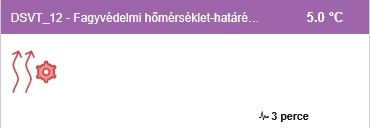
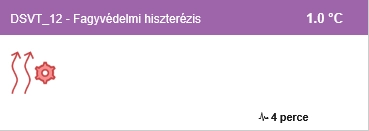
By default, these two SetPoint devices are available under the Domoticz Utility tab.
If the "Current parameters on the dashboard" option is enabled, the frost protection threshold and hysteresis are also displayed on the Domoticz dashboard, allowing the values to be adjusted directly from there.
If this option is disabled, both SetPoint devices remain available under the Utility tab.
Frost protection does not require the normal heating system to have an active heating demand. Its purpose is different: when the monitored temperature reaches the configured switching threshold, it intervenes independently and keeps the selected devices active until the temperature reaches the switch-off threshold.
This is particularly useful for mechanical equipment and outdoor components where unexpected cooling could otherwise result in frozen pipework, equipment damage, or other failures.
DSVT frost protection therefore does not necessarily mean activating additional heating. With an appropriate system design, the risk of freezing can also be reduced by circulating thermal energy that is already available within the building.

