DSVT provides an optional health-oriented comfort feature that adjusts the minimum cooling target temperature according to outdoor temperature.
The purpose of this function is to limit excessive differences between outdoor and indoor temperatures during very hot weather.
When enabled, the system raises the effective cooling target temperature if necessary, based on the configured maximum temperature difference, without changing the zone target temperature originally set by the user.
During summer heatwaves, moving suddenly between very hot outdoor conditions and a significantly cooler indoor environment can be uncomfortable or physically demanding for some people.
This may be particularly relevant for older adults, young children, and people with certain cardiovascular conditions.
However, an appropriate indoor temperature also depends on individual health conditions, humidity, clothing, and physical activity.
A 10°C difference between outdoor and indoor temperatures should therefore not be considered a universally applicable medical safety limit. DSVT uses this as a configurable default control parameter.
The function can be particularly useful when users want to automatically prevent excessively low indoor cooling targets during hot weather.
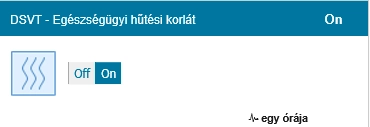
The function can be enabled through the Switches section of Domoticz using the Health-Oriented Cooling Limit selector switch created by DSVT.
The switch provides two states:
The function is disabled by default.
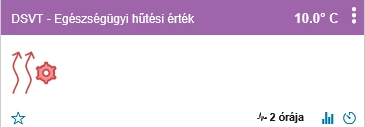
The second parameter determines how many degrees Celsius below the outdoor temperature the cooling target used by the controller may be set.
The default temperature difference is 10°C, but users can adjust it according to their requirements.
The calculation is:
Minimum Cooling Target = Outdoor Temperature − Maximum Allowed Temperature Difference
If the configured cooling target temperature of a zone is lower than this calculated minimum, DSVT uses the minimum value when determining the cooling switching thresholds.
If the zone's original target temperature is already equal to or higher than the calculated minimum, no health-oriented correction is required.
The cooling limit is applied independently within DSVT's 12 cooling zones.
For each active zone with a valid temperature sensor and no open-window restriction, the controller evaluates the configured cooling target temperature.
If that target is lower than the minimum calculated from outdoor temperature and the permitted temperature difference, the higher value is used when calculating the zone's cooling switching thresholds.
The health-oriented cooling limit therefore does not directly switch cooling off. Instead, it limits how low the effective cooling target temperature can be.
The actual switching thresholds are also influenced by cooling hysteresis and any enabled automatic weather forecast-based compensation.
Consider a system with the following settings:
DSVT calculates the minimum permitted target:
34°C − 10°C = 24°C
Because the original target of 21°C is lower than the calculated minimum of 24°C, the controller uses 24°C as the effective base target when calculating the zone's cooling switching thresholds.
The 21°C target configured in Domoticz remains unchanged. Only the value used internally for temperature regulation is restricted.
When outdoor temperature falls to 32°C:
32°C − 10°C = 22°C
The minimum effective cooling target therefore decreases to 22°C.
When outdoor temperature reaches 31°C:
31°C − 10°C = 21°C
At this point, the calculated limit equals the original 21°C target, so no additional increase in the effective cooling target is required.
Below 31°C outdoor temperature, the zone can again be regulated according to its original 21°C target, subject to all other active cooling conditions.
The health-oriented cooling limit is integrated into DSVT's cooling target calculation and therefore operates alongside other control functions.
These include:
Important: the health-oriented cooling limit is not the same as dew point-based condensation protection. These functions address different conditions and must be considered independently in radiant cooling installations.
This function can be particularly useful in buildings where:
However, the configured temperature difference should always be adapted to building use and occupants' needs.
During heatwaves, particularly where vulnerable individuals are present, maintaining a safe and appropriate indoor temperature takes priority over applying a general indoor-outdoor temperature difference rule.
DSVT's health-oriented cooling limit is an optional control function that calculates a minimum effective cooling target temperature according to outdoor temperature.
The restriction is applied independently to each zone and does not modify the original target temperatures configured by the user.
As outdoor temperature decreases, the restriction is automatically reduced and eventually becomes inactive when the calculated minimum is no longer higher than the original zone target.
When appropriately configured, the health-oriented cooling limit can support more comfortable summer operation and reduce excessive cooling demand while allowing DSVT's other control functions to remain active.