When converting existing heating and cooling systems to individual zone control, a common problem is that the heat source cannot operate reliably when supplying only a single zone with a low heating or cooling demand.
For example, if only one underfloor heating circuit requires heat while all other zone valves are closed, the available water flow rate and heat transfer capacity may decrease significantly. As a result, the boiler or heat pump may switch on and off too frequently, operate unstably, or even activate one of its protective functions.
DSVT offers a special control function to address this issue, which we call the Virtual Hydraulic Separator.
The basic principle is that when only one zone requests heating or cooling, the controller can automatically activate additional, predefined backup circuits.
This increases the available water flow rate and the active heat transfer surface within the system, potentially improving heat source stability and reducing short cycling.
Backup circuits can be configured separately for heating and cooling modes, allowing the system to accommodate the different requirements of each operating mode.
When properly configured, this function can provide several benefits:
Important: the Virtual Hydraulic Separator does not provide actual hydraulic separation and therefore cannot always replace a conventional hydraulic separator or low-loss header. Its suitability depends on the heat source's minimum flow rate and water volume requirements, as well as the hydraulic design of the installation.
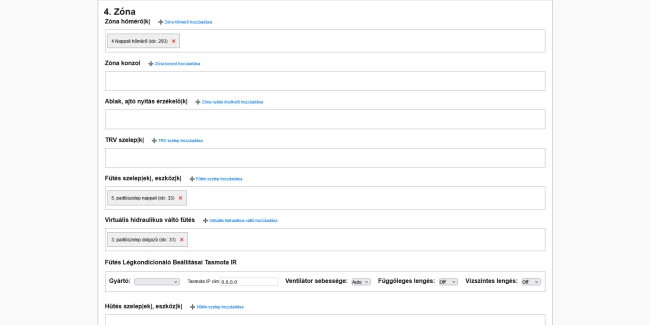
The function can be configured through the DSVT HTML-based configuration interface.
For each zone, you can define which additional circuits the controller may activate when required. Circuits are assigned using a drag-and-drop interface.
Different backup circuits can be assigned for heating and cooling modes. This is particularly important in buildings where not every heating circuit is suitable for cooling.
When selecting backup circuits, the current temperatures of the associated rooms, the size of the heat transfer surfaces, and any cooling restrictions should be taken into account.
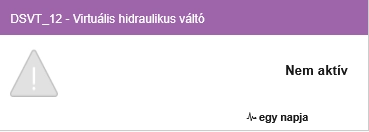
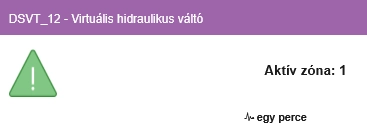
The status indicator displayed in the DSVT user interface shows whether the Virtual Hydraulic Separator function is currently active.
Inactive status: the system does not require any additional backup circuits, so the Virtual Hydraulic Separator does not intervene.
Active status: the controller activates additional backup circuits according to the configured conditions. The status indicator also identifies which zone triggered the intervention.
The effectiveness of the Virtual Hydraulic Separator depends largely on the hydraulic design of the installation and the appropriate selection of backup circuits.
During configuration, preference should be given to circuits that can be activated without causing significant discomfort or unnecessary energy consumption.
With proper configuration, this function can provide a software-based enhancement that improves the stability of existing zone-controlled systems, particularly where the minimum output or flow rate requirement of the heat source exceeds the demand of a single active zone.